April 2018
Housing one-sixth of the global population, India is the second most populous country in the world, with nearly 60% of its population living in urban areas. With urban population rising rapidly, the concern surrounding hygiene and sanitation is advancing, as the development of this poverty-stricken nation is restricted by this distressing issue.
Across India, half of the population, or at least 620 million people still defecate outdoors, a figure which only emphasises the need for greater support. Open defecation brings tremendous risk to a country, as the perilous issue is a major hazard to both human health and the surrounding environment. Within these marginalised communities much of the solid waste is emptied into rivers, lakes and ponds untreated, polluting water sources and increasing the spread of communicable diseases. Threatening the lives of adults and children alike, these diseases are linked to many fatalities in rural India, with the World Bank recently reporting that one in ten deaths in India is due to poor sanitation. Through the contamination of groundwater, children can pick up chronic infections which impair their bodies’ ability to absorb nutrients, leaving over 40 million children under five with stunted growth in these regions. Each year over 300,000 Indian children under five die from diarrheal diseases, the highest number of these deaths across the world.
Even for the children that do overcome this towering challenge, many are still denied the opportunity to reach their full potential. The education of many young girls is often crippled by the lack of toilet provision in schools, with more and more girls dropping out due to hygiene and sanitation issues. Within these marginalised schools, 4 out of 10 schools fail to provide working toilets and therefore, fail to accommodate the needs of a growing girl. When these young students hit puberty, there is a lack of privacy, meaning that many often stay at home and miss out on an education altogether. To help this nation fight poverty across these regions, it is vital that all have access to toilets and are educated on the severity of open defecation.
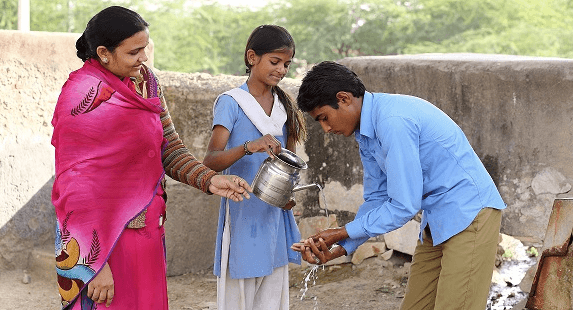
In October 2014, the Swaccha Bharat Mission (SBM), a national campaign by the Government of India was launched to clean streets, roads and infrastructure of the country. With the 150th Birthday of Mahatma Gandhi approaching in October 2019, the government have aimed to accomplish the appeal to ‘Clean India’ by the time of this landmark. As a part of this campaign, the Government are funding the construction of suitable facilities to help these marginalised communities combat sanitation and hygiene issues. These facilities are vital to assist the development of this struggling nation, but communities also require educational support over these issues to ensure a sanitation safe and clean environment is sustained. In support of this, we launched the Wakal 8 project alongside Mahan Seva Sansthan (MSS) in April 2015 aiming to assist with sanitation issues in 28 Gram Panchayats of the Phalasiya block in Udaipur district. With the government funding the construction of these vital facilities, our project was designed to sensitise, motivate and strengthen villages, schools and communities alike on Water Sanitation and Hygiene issues (WASH).
Following the Swaccha Bharat Mission, we were delighted to be informed that the entire Phalasiya block, all 28 Gram Panchayats have now been declared Open Defecation Free (ODF). The announcement from the government is a remarkable achievement in the appeal to ‘Clean India’ and will transform the lives of many children and adults alike.
Our partnership with MSS also continues to grow stronger following our project alongside the Swaccha Bharat Mission, recognising a great response with the work we completed on a school, village and Panchayat level. With this project now complete, as well as our Wakal 9 Drip irrigation Project, we look forward to beginning a new collaborative project with MSS in the near future.