June 2018
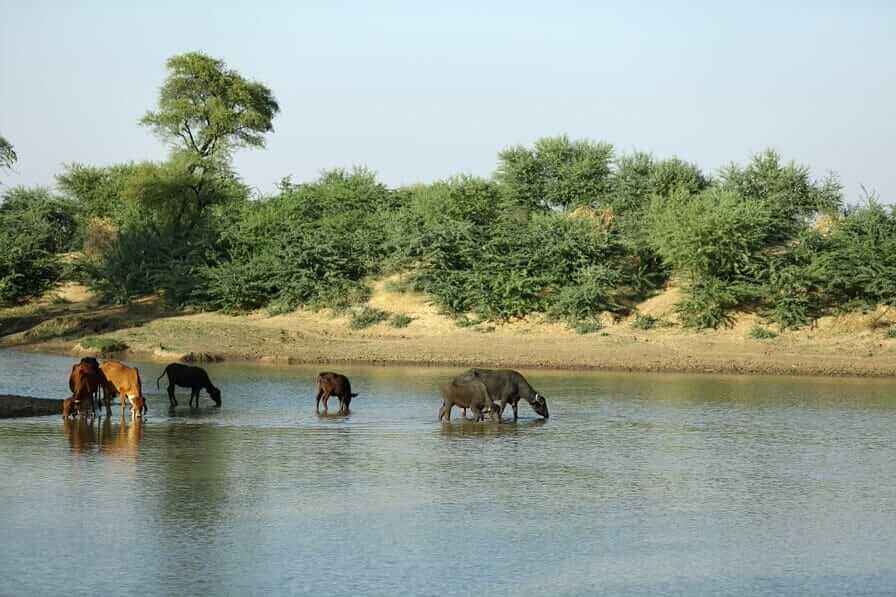
In April earlier this year, we launched the Revive and Thrive appeal to help the farmers of 10 villages within the Tonk District of Rajasthan to regain control of their suffering livelihoods. Following persistent droughts and the degradation of pasture land, many poor farmers have been deprived of good grazing, leaving them in a battle with impoverishment. Unable to feed their herds, these farmers have not only been stripped of their income, yet their way of life. The Revive and Thrive appeal has been designed to overcome the collapse of nomadic farming in these communities, enabling a greater future for these farmers and their families. By regenerating degraded pasture land and the surrounding environment, farmers can begin to live their lives again.
Alongside our partner, GVNML, degraded community pasture land can be regenerated with ‘Chauka’. This is a system of trenches and bunds to harvest rain and increase cultivable farmland through spillways and channels to fields and ponds. The resulting ground moisture supports year-round vegetation, providing a rich source of fodder for grazing animals. With the revival of one hectare of land, the lives of five herders and their families can be transformed. Launching the appeal just over a month ago, we have already recognised excellent progression in the development of Chauka systems. With the project aiming to rejuvenate 150 hectares of land, Chauka has already been applied to 15 hectares of land in Balapura and 10 hectares in Antoli village, benefiting 125 farmers and their families already.
With the monsoon due to arrive in Rajasthan between 15th June – 1st July, it is vital that as many Chaukas as possible are constructed to optimise water retrieval. We are delighted to have revived 25 hectares of land in such a short period and hope to complete more before the monsoon arrives. For these marginalised communities, it is integral to capitalise on the monsoon, as its increasingly erratic nature means there is no certainty over the next water source.
The revival of land is vital in alleviating poverty among these marginalised communities and we must do more to support this. Since launching the appeal in April, we have raised £1,005 of our £75,000 target and we must keep working to help these communities.