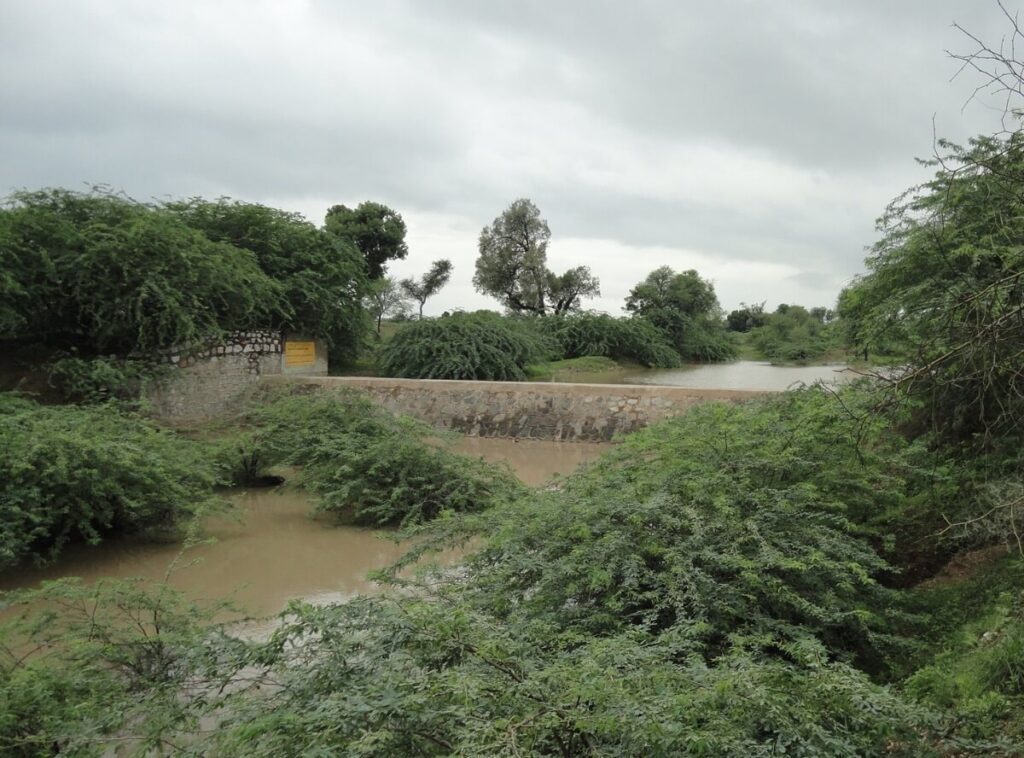
In 1991, WaterHarvest (then called Wells for India), together with AFPRO, built a small dam in Ramnagar village, south west of Jaipur. The dam was designed by WaterHarvest’s India director Om Prakash Sharma. Prior to the dam being built, the monsoon rains would rush over the hard, dry land with very little filtering down into the earth. As a result, local farmers struggled to find water for their crops. Once the dam was built, the water table rose and the water level in 25 nearby wells increased significantly, enabling 50 nearby farmers to grow more crops and feed more animals.
Revisiting programmes and beneficiaries
As part of our programme to monitor the long-term impact of our work, we have made regular visits to the local farmers to see how this dam changed their lives over the last 30 years. Chhitar, one of the local farmers, told us how the greater availability of water significantly increased the income from his farm enabling him to pay for his grandchildren to go to school and his son to start a shop.

Long term increase in income
Chhitar Meena is a farmer who has an open well located downstream of the dam. The increased water availability, resulting from the dam, meant that Chhitar was able to grow two crops each year, instead of just one. Greater crop production meant more crops to sell and also more crop to feed his animals and, a result, more milk to sell. The number of goats increased from just eight to around thirty. He also bought buffaloes and other animals. Perhaps most significantly, the income enabled him to purchase two tractors, rather than using bullocks and plough. Even in the years of low rainfall, the dam ensured there was enough water in the well for the crops and animals.

A better quality of life for his family
The increase in income meant Chhitar was able to support his family -even as his family size increased over time. He even paid for his grandchildren to go to a private school. The increased prosperity of the farm meant that Chhitar no longer had to leave the village to go and work as a farm labourer in other villages to earn money. On our most recent visit, Chhitar told us this year he had had a very good crop and how he happy is that his adult son has started a small shop – enabling his son to also have a better life.
Sustained impact
The Ramnagar dam was the first of nine similar dams constructed during by WaterHarvest between 1991 and 1994. At that time, the water levels in the surrounding areas were much higher than they are today. However, the trend towards depleting ground levels was clear and this programme of water harvesting has had a life changing impact on 50 farmers and their extended families.