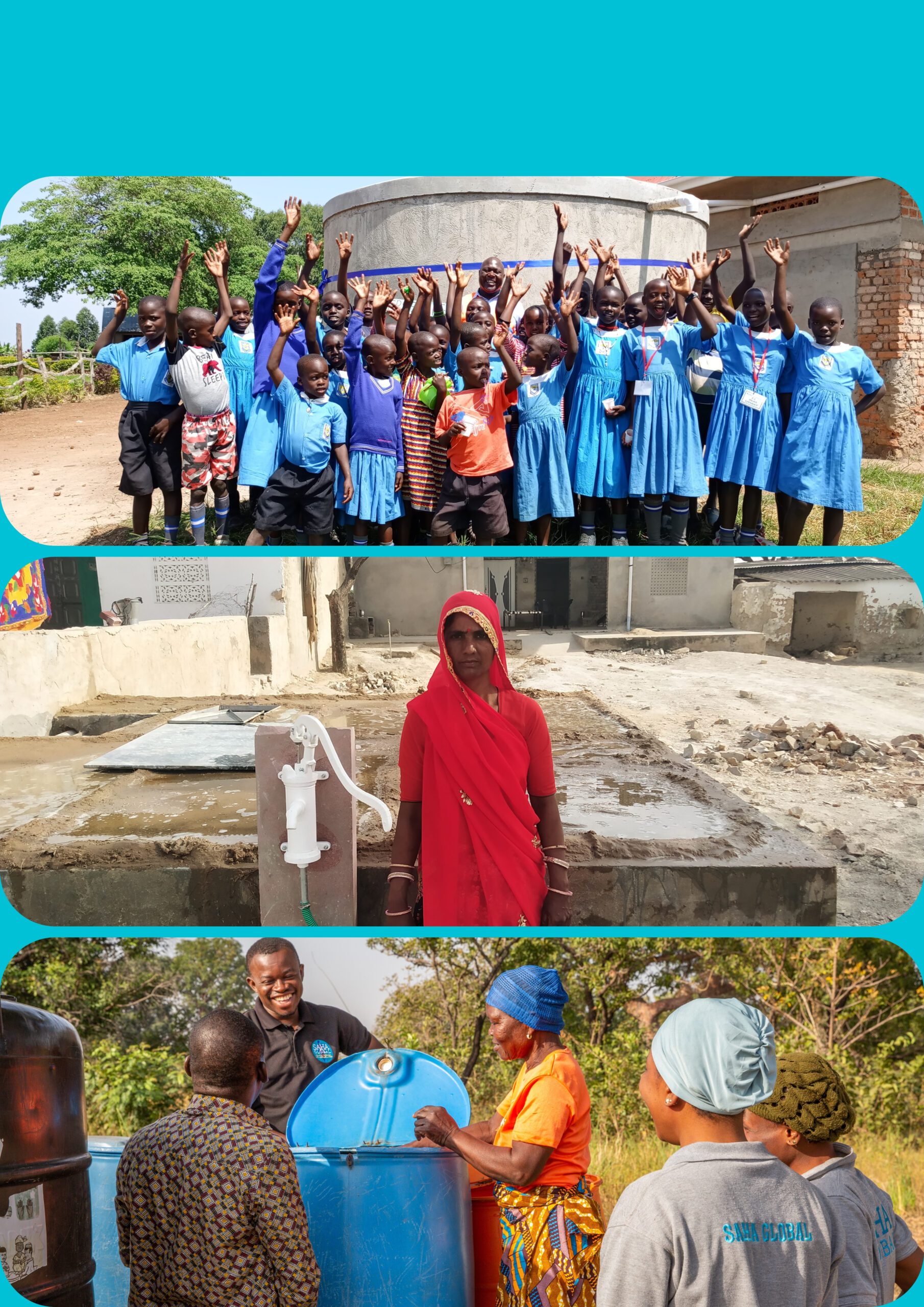

We are so happy to share the news that following our renovation works, the dugout in Sinsina which is usually dry this time of year, is full of water!
In remote regions of Ghana year round steams are rare and ground water is often inaccessible, so communities collect rainwater in dugouts but these are now drying out for several months at a time due to climate change. This means villagers, especially women and young girls have to walk very long distances to find often un-safe water, disrupting their education and work.
We are helping to resolve this problem by working with our local partner Saha Global to expand and rehabilitate dugouts to ensure villagers have a sustainable source of clean drinking water.
The renovation works at Sinsina took place over several months last year, resulting in a deeper dugout three times its original size. Vertiva grass and trees were also planted around the dugout to reduce evaporation during the dry season.
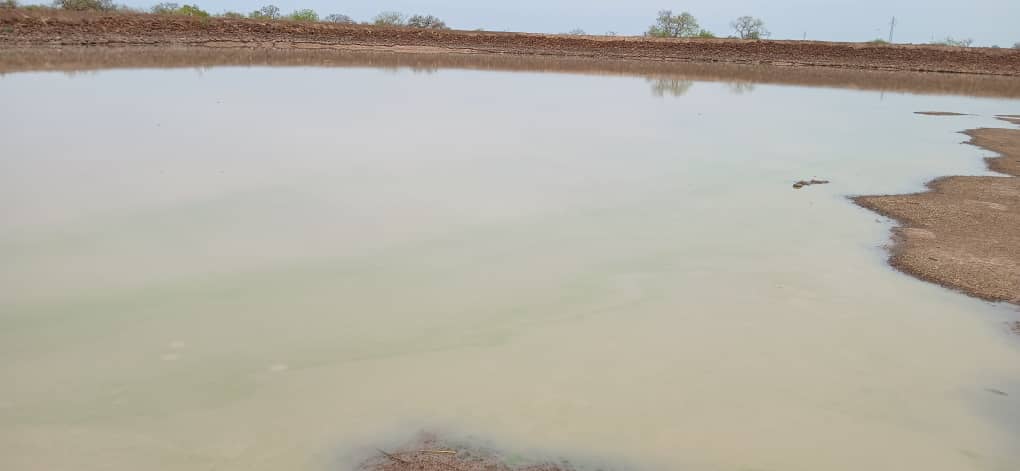
The dugout at Sinsina usually runs dry in March each year but as this photo shows, we are so pleased to see it was still full of water in April.
It is wonderful to see how clean drinking water is bringing joy to children in Sinsina during a time when they would usually be struggling with water access. Many thanks to everyone who has donated towards our work in Ghana, we are really grateful for your support.